

BRITAIN'S car colour choices appear to have reflected the rise of digital technologies ever since the dot com boom, according to analysis going back more than 100 years.
But there is another, more practical, reason why the colour has gone from British roads – the importance of strong used car values to fleet car operators.
Automotive technical data experts Vehicle Data Global, which holds Britain's most comprehensive live and historic database of vehicle features, crunched the numbers on the most popular car colours since 1900.
The results show that the era known by design historians as 'Y2K Futurism' saw the old staple primary car colours such as red and blue replaced first by silver in a 26-year trend that now sees grey as the most popular choice on the road.
Since the year 2000, car buyers first favoured silver, then white and now grey, with black enjoying one brief interlude as the most popular choice.
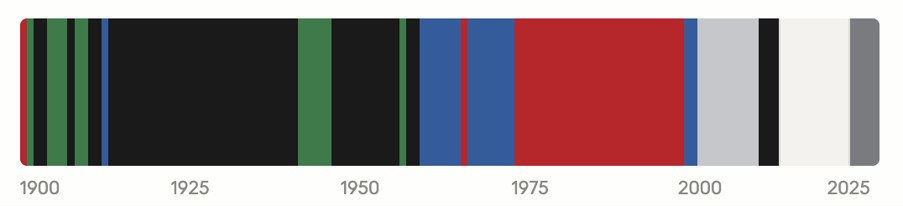
The analysis, which is based on cars on the road today – including those first registered up to 126 years ago - shows how car colour choices appear to reflect a wider cultural mood alongside design trends also seen in fashion and interior design.
VDG says that the rise of technologically sophisticated electric vehicles and the position of grey as today's paintwork of choice is no coincidence, in contrast to the prominence of green, black and blue during and after WW2 and the explosion of red during the 70s and 80s. But they stress that there is more to it than just consumer taste.
Red had a long reign as Britain's favourite car colour, between 1973 and 1997, but that has now been matched by the various monochromatic choices that have dominated since 2000.
VDG's colour data paints a picture of historic change in Britain, with utilitarian and austere choices of green or black dominating until the explosion of consumer culture in the 1960s saw blues and reds take over.
The switch to monochromatic shades of silver, white and grey coincided with the rise of the technology sector which strongly influenced consumer product design, most famously represented by Apple, with its suite of silver, white and grey devices.
But VDG says there is more behind the evolution of car colours than cultural preferences, pointing out that the increasing sophistication of the automotive market and its domination by company car fleets made certain paint choices important for maximising future residual values.
For example, silver was particularly favoured for technical and chemical reasons as resilient to road grime and its capacity to be returned to like-new quality for sale as a used car.
As fleets became ever more focused on achieving the best possible resale values, cars that could be most easily refurbished became their first choice. Silver, white and grey benefit from optical qualities that hide the minor imperfections which are more apparent on solid colour vehicles.
While it is interesting to connect car colours with wider cultural trends, UK automotive is one of the most sophisticated markets in the world and not much happens in it without good practical and professional reasons.
So, although the rise of digital technological design aesthetics doubtless made achromatic car shades appealing to buyers, the focus of fleets in particular on resale values is often overlooked.
Grey is the perfect colour for the moment we are now in, because it combines business priorities with an aesthetic that suits the increasingly high-tech nature of cars. As a neutral, mid-tone shade, grey is exceptionally good at hiding the minor scratches, road chips, and swirl marks from automatic car washes that accumulate over 60,000 miles of fleet service.
And dealers favour it because it optically masks minor imperfections, meaning less paint correction and detailing to look showroom-ready for the next owner, thereby saving significant prep costs.